
Snap Just Laid Off 1,000 People AI Is Now Writing 65% of Its Code
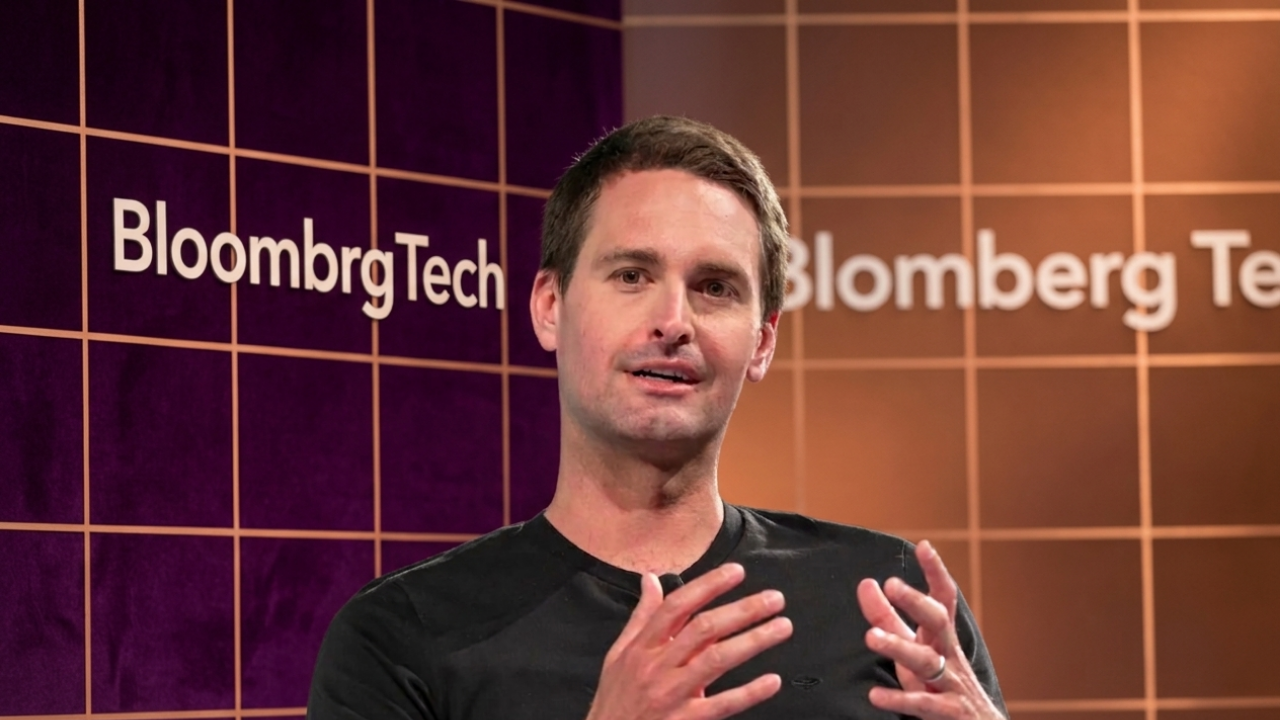
On April 15, 2026, Snap CEO Evan Spiegel sent a note to employees that a lot of people in Silicon Valley had been dreading. The company was cutting approximately 1,000 jobs about 16% of its full-time workforce and eliminating more than 300 open roles that would simply never be filled. The reason, Spiegel said plainly, was artificial intelligence.
“Rapid advancements in artificial intelligence enable our teams to reduce repetitive work, increase velocity, and better support our community, partners, and advertisers,” Spiegel wrote. Translation: we have fewer tasks that require human hands, because AI is handling them.
What makes Snap’s announcement different from the usual corporate restructuring language is that one number stands out and refuses to be buried in the press release: AI now generates more than 65% of Snap’s new code. Think about what that actually means. The majority of what Snap’s engineering teams are shipping features, bug fixes, infrastructure improvements is being written not by the developers on payroll, but by AI tools. When that’s your reality, the math on headcount starts working against the humans in the room.
The Numbers Behind the Decision
Snap’s workforce stood at 5,261 full-time employees as of December 2025. After this restructuring, roughly 4,200 remain. The company expects the layoffs combined with broader cost-cutting measures to deliver more than $500 million in annualized savings by the second half of 2026. That’s real money. The severance bill, by comparison, runs between $95 million and $130 million, mostly landing in Q2. On a pure cost-benefit basis, the math is brutally clear.
Affected US employees will receive four months of severance pay, continued healthcare coverage, and accelerated equity vesting. That’s a reasonable package by industry standards, and notably more generous than many of the layoffs we saw in 2023 and 2024. But it doesn’t change the structural reality: these roles aren’t coming back.
Irenic Capital, the activist investor holding a roughly 2.5% economic interest in Snap, had been pushing for exactly this kind of restructuring. In a letter to the board that preceded the announcement, Irenic framed AI replacement of human roles not as a consequence to be managed but as a goal to pursue. That kind of language from institutional investors carries weight and it’s a signal of how Wall Street is now thinking about AI and headcount across the entire tech sector.
Snap Is Not Alone This Is an Industry-Wide Shift
Key Points The 2026 AI Layoff Wave
- Over 73,200 tech jobs were cut by 95 companies in Q1 2026 alone, according to Layoffs.fyi data
- Oracle is restructuring on an entirely different scale potentially 20,000 to 30,000 job cuts to fund its AI data-center buildout
- Amazon laid off approximately 16,000 employees as part of its AI restructuring plan
- Snap, Disney, Meta, and Oracle all announced significant workforce reductions within the same month
- Multiple tech industry leaders have said most white-collar computer-based roles could be automated within 12 to 18 months
Snap’s announcement landed alongside a wave of similar moves. Variety reported that Disney simultaneously announced its own round of roughly 1,000 cuts, though Disney’s rationale centered on its new CEO Josh D’Amaro’s mandate to streamline operations rather than explicit AI automation. The contrast is revealing: in one week, you had the same headline number 1,000 jobs but two completely different justifications. One is a management-driven restructuring. The other is an AI-driven one. The market treated them the same way. Snap’s stock rose 11% in pre-market trading on the news.
That stock reaction tells you something important about where investor sentiment has landed. The market isn’t just tolerating AI-driven layoffs it’s rewarding them. When you announce that a machine can do the work that cost you a human salary, your valuation goes up. The incentive structure now clearly favors replacing human roles with AI where possible.
As we covered in our piece on companies that fired people for AI agents and later regretted it, this isn’t always a clean transition. Some organizations moved too fast, lost institutional knowledge, and found that AI agents couldn’t handle the edge cases that experienced humans navigated intuitively. Snap’s restructuring appears more measured the 65% code-generation number suggests a company that has been quietly building this infrastructure for a while, not one that rushed to cut costs overnight.
What 65% AI-Generated Code Actually Means
The 65% figure deserves more attention than it’s getting in most coverage. This isn’t the same as saying AI helped developers write code faster that’s been the story for the past two years, and it’s fairly well understood. Sixty-five percent of new code generation suggests AI is now taking first drafts of entire features, infrastructure changes, and possibly bug fixes largely off developers’ plates. The humans in the loop are increasingly reviewers, architects, and decision-makers rather than writers of every line.
Tools like Claude Code, GitHub Copilot Workspace, and Cursor Composer have been moving this number steadily upward across the industry. How developers use AI tools has shifted fundamentally from “AI as autocomplete” to “AI as first-draft author.” The difference matters enormously for headcount decisions. If a team of 10 engineers can now produce what used to require 20, that’s not an abstract efficiency gain it’s a direct input into how many people you need to hire (or keep).
The Bigger Picture: Where This Is Headed
Snap’s layoffs don’t happen in a vacuum. The Stanford 2026 AI Index, released just days before Snap’s announcement, documented exactly the kind of acceleration that makes these moves possible. AI models are improving on complex reasoning benchmarks at a pace nobody forecasted three years ago. The gap between what AI can do and what humans do exclusively has narrowed substantially and it’s continuing to narrow.
A PwC study released in April 2026 surveying 1,217 senior executives across 25 sectors found that 74% of AI’s economic value is being captured by just 20% of companies. The leaders aren’t deploying AI as a productivity tool they’re using it to reshape business models, reduce fixed costs, and operate with leaner headcounts. The gap between those companies and everyone else is widening. Snap, for all the pain of this week’s announcement, is clearly trying to be in that 20%.
The white-collar reckoning that technologists have been predicting for years is no longer theoretical. Multiple tech industry leaders have publicly estimated that most computer-based, white-collar roles could be automated within 12 to 18 months. Whether that timeline proves accurate or optimistic, the direction of travel is not in doubt. If you want to know which roles are most exposed, our breakdown of jobs on Anthropic’s AI risk list gives you a candid picture of where the pressure is building.
The Interesting Bet Snap Is Protecting
Here’s what’s easy to miss in the coverage: even as Snap cuts its workforce, it is explicitly protecting its investment in augmented reality glasses called Specs, expected to debut later in 2026. The restructuring appears designed to separate the legacy Snapchat business where AI can absorb significant workload from the hardware bet that requires intensive human engineering and design.
That’s a sophisticated strategic move, not a panic cut. Snap is essentially saying: the parts of our business where AI can do the heavy lifting will run leaner from now on. The parts that require human creativity, hardware engineering, and high-stakes product bets will stay staffed. That framing makes the 1,000-person cut look less like a retreat and more like a deliberate reallocation of human capital.
What This Means for the Rest of Tech
Every tech company with a public market valuation is now watching Snap’s stock pop and doing the same internal math. The message from Wall Street is clear: if you can credibly argue that AI is handling a significant portion of the work, investors will reward you for running a leaner operation. That creates an enormous incentive to accelerate AI adoption not just for efficiency, but as a signal to the market.
The downstream effects for tech workers are real and immediate. Entry-level roles in software engineering, QA, data annotation, content moderation, and customer-facing support are under the most pressure. Mid-level roles that involve significant repetitive work generating boilerplate code, writing standard documentation, processing structured data are the next wave. Senior engineers, product managers, and people in roles requiring deep judgment and relationship management are, for now, more insulated.
But “more insulated” is not the same as “safe.” The pace of change in AI capability is fast enough that predictions made with confidence in 2024 are already outdated. The honest answer is that nobody knows exactly how far down the org chart the disruption travels, or how quickly.
What Comes Next for Snap and for All of Us
Snap’s next earnings call will be the first real accountability moment for this restructuring. If the company can demonstrate that product velocity held up, advertiser revenue grew, and the Specs hardware bet is on track all with 16% fewer employees it will have provided the most compelling proof yet that AI-driven workforce reduction can work at scale in a consumer technology company.
If the cuts damage product quality, slow down feature development, or create gaps in safety and moderation that hurt the platform’s reputation, it will become a cautionary tale about moving too fast joining the companies we’ve documented that rushed AI integration and later found themselves trying to rebuild what they lost.
Either way, this is not a story that ends with Snap. Oracle, Amazon, Meta, and a long line of companies behind them are watching this experiment run in real time. The 2026 AI layoff wave has a leading indicator now, and it just reported for duty in Santa Monica.

An AI researcher who spends time testing new tools, models, and emerging trends to see what actually works.

