
Best AI Tools for E-commerce Customer Lifetime Value Optimization
Introduction
Customer Lifetime Value (CLV or LTV) optimization is the practice of increasing the total revenue a customer generates across their relationship with a brand. For e-commerce businesses, maximizing CLV means higher profitability, more efficient marketing spend, improved retention, and a healthier unit economics equation. While acquisition drives growth in the short term, CLV optimization ensures sustainable, profitable scaling by focusing on repeat purchase frequency, average order value, retention rate, and customer loyalty.
Why CLV matters for e-commerce:
- Higher CLV lowers effective customer acquisition cost (CAC).
- Repeat customers convert at higher rates and cost less to serve.
- CLV-focused businesses have more predictable revenue and cash flow.
- Optimizing CLV supports better decisions for product development, loyalty programs, and customer service.
Key challenges:
- Identifying high-LTV customer segments early.
- Predicting future behavior from sparse or noisy data.
- Personalizing experiences, offers, and communications at scale.
- Measuring incremental lift from retention initiatives.
- Aligning operations (fulfillment, returns, support) to long-term value.
How AI helps:
- Predictive models identify high-value prospects and at-risk customers.
- Personalization engines recommend the right product and the right offer at the right time.
- Automated lifecycle campaigns (email, SMS, push, in-app) increase repeat purchase rates.
- CLV-aware ad bidding and budget allocation shift acquisition toward profitable cohorts.
- Experimentation and uplift measurement isolate what actually increases CLV.
Short transition: below are 25 top AI tools that solve discrete parts of CLV optimization — from predictive LTV models and churn prevention to personalization, pricing, retention campaigns, and lifecycle analytics.
TOOL 1 — CLVBOOST AI
Overview
CLVBoost AI provides robust customer lifetime value prediction at individual and cohort levels using probabilistic models and LTV decomposition.
Best For
Mid-size to enterprise e-commerce brands that need precise LTV forecasts for acquisition and budget allocation.
Key Features
- Individual-level LTV scoring and cohorts
- Probabilistic lifetime revenue forecasts
- CAC-to-LTV scenario simulations
- Integration with ad platforms for LTV-aware bidding
Use Cases
- Allocating ad spend to high-LTV lookalike audiences
- Modeling payback periods for customer cohorts
- Prioritizing retention budgets by forecasted value
Pricing
Tiered by stored profiles and model complexity.
Pros
- Highly accurate LTV forecasts
- Direct ad-platform integrations for activation
Cons
- Requires clean customer identifiers for best accuracy
Alternatives
- LTVLab
- RetainIQ
TOOL 2 — RETAINIQ AI
Overview
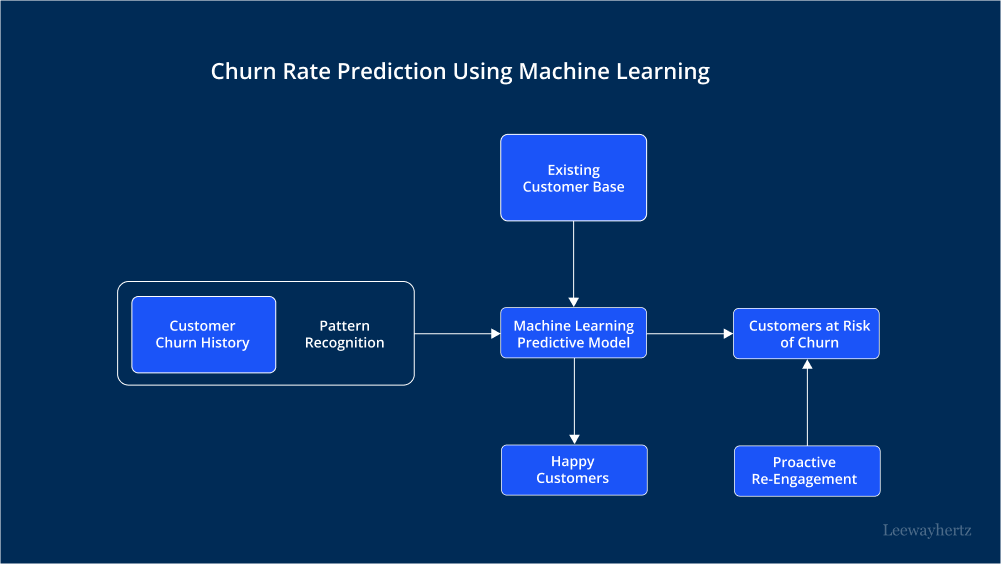
RetainIQ AI predicts churn risk and recommends personalized win-back sequences to recover at-risk customers.
Best For
DTC brands focused on reducing churn and increasing repeat purchase rates.
Key Features
- Churn risk score with causal signals
- Multi-channel win-back playbooks (email, SMS, push)
- Automated timing optimization (send-time & cadence)
- A/B testing for flow effectiveness
Use Cases
- Re-engaging customers before predicted churn
- Testing retention offers by segment
- Reducing churn for subscription products
Pricing
Subscription by active customer volume and channels used.
Pros
- Actionable, automated retention flows
- Clear ROI tracking on win-back campaigns
Cons
- Small datasets reduce predictive power initially
Alternatives
- ChurnHero AI
- Remarkety AI
TOOL 3 — LTVLAB
Overview
LTVLab offers cohort-level LTV analytics, decomposition (AOV, frequency, retention) and scenario planning for growth teams.
Best For
Product, growth, and finance teams who need clear LTV inputs for strategy and forecasting.
Key Features
- Cohort decomposition (AOV × Frequency × Retention)
- Scenario and sensitivity analysis tools
- Visual cohort explorer with retention curves
- Exportable model outputs for finance and ad ops
Use Cases
- Setting payback windows for acquisition campaigns
- Pricing experiments tied to LTV impact
- Prioritizing product improvements that improve retention
Pricing
Plan-based depending on retained cohort history.
Pros
- Transparent decomposition that non-technical teams understand
- Strong planning and scenario tools
Cons
- Not a direct activation/personalization platform
Alternatives
- AnalyticsHub AI
- InsightsRadar AI
TOOL 4 — PERSONALIZE PRO AI


Overview
Personalize Pro AI delivers real-time product and content personalization across website, email, and app to boost AOV and repeat purchases.
Best For
Retailers with medium-to-large catalogs who need contextual personalization.
Key Features
- Real-time recommender (session & lifetime signals)
- Bundling and cross-sell suggestions optimized for LTV
- Channel-agnostic personalization API
- Learn-and-adapt models for seasonal shifts
Use Cases
- Personalized product carousels on PDP and cart pages
- Lifecycle-triggered upsell offers via email or push
- Increasing average order value through dynamic bundles
Pricing
Usage-based: API calls and served recommendations.
Pros
- Cross-channel personalization increases AOV and repeat rate
- Quick to integrate via APIs
Cons
- Quality depends on catalog attribute completeness
Alternatives
- Nosto AI
- Clerk.io AI
TOOL 5 — CHURNHERO AI
Overview
ChurnHero AI focuses on long-term retention for subscription and membership e-commerce by combining predictive signals and personalized journeys.
Best For
Subscription-based e-commerce (boxes, consumables, membership programs).
Key Features
- Predictive cancellations and risk signals
- Tailored retention offers and trial extensions
- Onboarding health scoring for new subscribers
- Revenue-at-risk dashboards
Use Cases
- Reducing subscription cancellations with targeted offers
- Improving onboarding to increase activation and retention
- Measuring incremental retention lift from interventions
Pricing
Tiered by subscriber count and retention flows.
Pros
- Built specifically for subscription dynamics
- Strong onboarding and activation modules
Cons
- Less focused on one-off e-commerce purchases
Alternatives
- Chargebee retention modules
- Recurly + retention add-ons
TOOL 6 — LIFETIME ADS AI
Overview
Lifetime Ads AI optimizes paid media bidding and audience selection based on predicted LTV rather than immediate conversion value.
Best For
Brands scaling paid acquisition and seeking to improve long-term ROAS.
Key Features
- LTV-driven lookalike audience creation
- Bid rules that target profitable payback windows
- Integration with major ad platforms for direct activation
- Cohort-level performance monitoring
Use Cases
- Shifting ad spend toward historically profitable cohorts
- Building lookalikes that maximize long-term value
- Automating bid adjustments by predicted LTV
Pricing
Percent of ad spend or fixed integration fee.
Pros
- Improves marketing ROI over time
- Directly connects LTV forecasts to acquisition
Cons
- Requires robust attribution and conversion LTV mapping
Alternatives
- CLVBoost AI integrations
- Madgicx AI with LTV inputs
TOOL 7 — RECOMMENDR AI
Overview
Recommendr AI is an advanced recommender that optimizes for uplift in repeat purchases and lifetime value by surfacing items that historically increase retention.
Best For
Retailers aiming to increase cross-sell and repeat purchase behavior through intelligent recommendations.
Key Features
- Uplift-optimized recommendations (not only popularity)
- Personalized bundling and replenishment prompts
- Lifecycle-aware ranking (first-time vs returning customers)
- Back-in-stock and replenishment nudges
Use Cases
- Increasing reorder rates for consumables
- Designing onboarding product sequences that raise retention
- Offering complementary bundles that raise AOV and future purchases
Pricing
Per-recommendation / monthly seat model.
Pros
- Focus on long-term uplift rather than immediate click-throughs
- Intelligent replenishment for recurring purchases
Cons
- Requires historical purchase behavior for best results
Alternatives
- Personalize Pro AI
- AlphaPredict AI
TOOL 8 — LTV LENS ANALYTICS


Overview
LTV Lens Analytics is a BI-focused toolkit that centralizes revenue, retention, and engagement metrics with LTV-driven KPIs for finance and growth.
Best For
Data teams and finance teams measuring unit economics and forecasting.
Key Features
- Pre-built LTV dashboards and cohort explorers
- CAC-to-LTV payback visualization
- Cohort comparison and drill-downs to campaign level
- Exportable financial models for board reporting
Use Cases
- Monthly LTV and CAC reporting for stakeholders
- Linking acquisition channels to long-term value
- Scenario planning for growth investments
Pricing
Seat or data-volume pricing.
Pros
- Clear finance-grade outputs for decision making
- Bridges marketing and finance conversations
Cons
- More analytical than activation-focused
Alternatives
- AnalyticsHub AI
- InsightsRadar AI
TOOL 9 — LOYALTYLAB AI
Overview
LoyaltyLab AI optimizes loyalty program structures, rewards, and communications using value-based segmentation and predictive uplift testing.
Best For
Brands with loyalty programs seeking to increase member LTV and engagement.
Key Features
- Reward optimization by predicted LTV lift
- Tier advancement strategies and gamification experiments
- Personalized loyalty messaging and campaign cadences
- ROI measurement of loyalty initiatives
Use Cases
- Designing tier benefits that increase retention
- Testing reward types (discounts vs experiences) for long-term value
- Personalizing loyalty touchpoints to increase frequency
Pricing
Program-based pricing depending on member count.
Pros
- Directly measures loyalty program impact on LTV
- Helps avoid reward over-discounting
Cons
- Works best with an existing member base
Alternatives
- Antavo-like loyalty tools
- Smile.io + AI add-ons
TOOL 10 — OFFER OPTIMIZER AI
Overview
Offer Optimizer AI determines the optimal incentive (discount, free shipping, bundle) to maximize customer lifetime value while protecting margin.
Best For
Brands that use promotional tactics frequently and want to optimize long-term effects.
Key Features
- Offer uplift modeling and class-based elasticity
- Profit-aware offer recommendations per segment
- Dynamic coupon delivery channels and timing
- Incremental lift measurement
Use Cases
- Reducing unnecessary discounting while retaining conversion lift
- Delivering higher-value offers only to high-LTV prospects
- Comparing long-term LTV impact of various promotional tactics
Pricing
Campaign- or offer-based pricing.
Pros
- Protects margins while increasing CLV
- Data-backed offer decisions
Cons
- Needs historical promo response data for best performance
Alternatives
- SmartOffers AI
- SaleBooster AI
TOOL 11 — ONBOARDFLOW AI
Overview
OnboardFlow AI optimizes new-customer onboarding sequences to maximize second-order purchases and early retention metrics.
Best For
DTC brands focusing on improving activation and reducing early churn.
Key Features
- Welcome journey personalization by acquisition source
- Activation milestones and nudges (first refill, tutorial)
- Onboarding health scoring and interventions
- Cross-sell timing triggers
Use Cases
- Increasing conversion from trial to repeat purchase
- Improving activation for subscription onboarding
- Segmenting onboarding flows by predicted LTV
Pricing
User-tiered or event-based.
Pros
- Directly improves early-retention metrics
- Easy integration into email and in-app flows
Cons
- Needs well-defined activation KPIs
Alternatives
- ChurnHero AI
- CreativeBrief AI
TOOL 12 — CUSTOMER JOURNEY AI
Overview
Customer Journey AI maps cross-channel touchpoints, quantifies their contribution to LTV, and surfaces friction that reduces lifetime value.
Best For
Brands with complex funnels spanning paid, organic, email, and support channels.
Key Features
- Multi-touch contribution analysis
- Path-to-high-LTV identification
- Drop-off point detection with recommended fixes
- Attribution adjustments for long windows and recurring purchases
Use Cases
- Identifying highest-converting customer journeys for replication
- Detecting friction that reduces repeat purchases
- Aligning channel teams around LTV-increasing paths
Pricing
Connector-based pricing.
Pros
- Holistic view of customer experience and LTV drivers
- Prioritizes fixes that materially affect long-term revenue
Cons
- Requires broad data collection across channels
Alternatives
- OnsiteAttribution AI
- AnalyticsHub AI
TOOL 13 — REVUP AI
Overview
RevUp AI runs uplift experiments to determine which interventions (offers, messages, UX changes) actually increase LTV rather than just immediate conversions.
Best For
Brands that want rigorous, experiment-driven decision making around retention.
Key Features
- Randomized controlled trial (RCT) orchestration
- Incremental LTV measurement and statistical significance testing
- Automated segment assignment and rollouts
- Experiment catalog and recommendation engine
Use Cases
- Validating which loyalty features increase customer value
- Measuring impact of onboarding tweaks on future purchases
- Running uplift tests for pricing changes
Pricing
Experiment credits or subscription.
Pros
- Isolates causal impact on LTV
- Reduces wasted spend on ineffective tactics
Cons
- Requires traffic and volume for statistical power
Alternatives
- CatalogA/B AI (listing experiments)
- ConvertTrack AI
TOOL 14 — REVIEWS TO VALUE AI
Overview
Reviews to Value AI analyzes post-purchase reviews and NPS feedback to surface product improvements that materially increase repeat purchase and referral rates.
Best For
Brands wanting to translate voice-of-customer into higher LTV via product and CX improvements.
Key Features
- Sentiment and theme extraction tied to SKU and cohort
- Correlating feedback themes to repeat purchase behavior
- Prescriptive recommendations for product improvements and FAQ updates
Use Cases
- Prioritizing product improvements that decrease returns and increase repurchase
- Improving packaging and instructions to reduce returns
- Detecting issues that reduce customer advocacy
Pricing
Volume-based analysis pricing.
Pros
- Turns qualitative feedback into measurable LTV impact
- Helps product teams prioritize fixes
Cons
- Requires sufficient review volume for signal clarity
Alternatives
- ReviewGuard AI
- InsightsRadar AI
TOOL 15 — VIP SEGMENTER AI
Overview
VIP Segmenter AI finds emerging high-value customers early using behavioral markers and lifecycle signals, then automates VIP treatment.
Best For
Brands that want to systematically grow and nurture high-LTV cohorts.
Key Features
- Early-warning VIP detection model
- Automated VIP perks and retention flows
- Predictive next-best-offer for VIPs
- Lifetime-profitability dashboards per VIP cohort
Use Cases
- Creating targeted VIP programs that increase repeat purchase and referrals
- Prioritizing service and shipping for high-LTV customers
- Testing VIP offers for incremental revenue lift
Pricing
Per-segment or subscriber-based pricing.
Pros
- Focuses retention investment where it matters most
- Scales VIP management via automation
Cons
- Requires agreed VIP eligibility thresholds and governance
Alternatives
- LoyaltyLab AI
- AffiliateCRM AI (for partner-tier logic)
TOOL 16 — PRICEMIND AI
Overview
PriceMind AI optimizes customer- and segment-level pricing to maximize long-term profit while maintaining conversion and retention.
Best For
Brands with margin sensitivity that need dynamic price strategies aligned to LTV.
Key Features
- Elasticity modeling per segment and SKU
- Lifetime-margin-aware price suggestions
- Promotion impact on long-term value simulations
- Price personalization at checkout
Use Cases
- Testing price personalization for repeat customers
- Modeling the long-term impact of permanent price adjustments
- Preventing discounting that erodes lifetime margin
Pricing
Model- and volume-based pricing.
Pros
- Balances immediate conversion with lifetime profit
- Helps avoid destructive discounting
Cons
- Price personalization may need legal/regulatory review in some regions
Alternatives
- PricePilot AI
- Offer Optimizer AI
TOOL 17 — CX AUTOMATE AI
Overview
CX Automate AI reduces friction in support interactions and proactively resolves issues that would otherwise reduce lifetime value.
Best For
Stores where poor CX / slow support reduces repeat purchases and increases returns.
Key Features
- Automated resolution for common issues (returns, tracking)
- Proactive outreach on late deliveries or product issues
- Customer sentiment routing and escalation
- Post-resolution follow-up flows to recover goodwill
Use Cases
- Reducing churn caused by poor post-purchase experience
- Turning negative experiences into repeat buyers via personalized remedies
- Improving NPS and referral propensity
Pricing
Per-message and automation volume.
Pros
- Protects LTV by reducing friction after purchase
- Frees support agents for complex cases
Cons
- Complex escalations still need humans
Alternatives
- SellerComms AI
- Gorgias integrations
TOOL 18 — REVENUE RECOVERY AI
Overview
Revenue Recovery AI focuses on recovering high-LTV abandoned carts with tailored incentives that consider future value impact.
Best For
Merchants who lose high-value customers at checkout and want to avoid short-sighted discounting.
Key Features
- Abandonment probability weighted by predicted LTV
- Personalized recovery offers that optimize lifetime profit
- Channel-appropriate recovery (email, SMS, push)
- Recovery performance analytics by cohort
Use Cases
- Recovering high-value carts with offers that don’t reduce future purchase propensity
- Prioritizing recovery actions for VIP or high-LTV prospects
- Measuring net LTV impact of recovery campaigns
Pricing
Per-recovery or subscription.
Pros
- Avoids one-size-fits-all discounting
- Targets recovery spend where it increases lifetime value most
Cons
- Requires initial LTV model to function effectively
Alternatives
- RecoverX AI
- AbandonPro AI
TOOL 19 — REFERRAL UPLIFT AI
Overview
Referral Uplift AI optimizes referral incentives and target audiences to increase high-quality referred customers who deliver higher CLV.
Best For
Brands aiming to scale via word-of-mouth and referral programs with quality controls.
Key Features
- Predictive quality scoring of referred customers
- Incentive optimization that balances acquisition and LTV
- Viral loop performance tracking and cohort LTV comparison
Use Cases
- Designing referral rewards that attract high-LTV referees
- Measuring long-term value of referred vs paid-acquired customers
- Scaling ambassador-driven referrals
Pricing
Program- or referral-volume pricing.
Pros
- Focus on referral quality, not just quantity
- Helps lower CAC with higher LTV cohorts
Cons
- Referral programs need initial seeding and monitoring
Alternatives
- ReferralCandy with AI layers
- LoyaltyLab AI
TOOL 20 — SUBSCRIPTION INTEL AI
Overview
Subscription Intel AI optimizes mean time between orders, renewal offers, and churn prevention for replenishment and subscription models.
Best For
Consumables, beauty, and repeat-purchase subscription businesses.
Key Features
- Replenishment cadence optimization
- Proactive win-back for renewal lapses
- Experimentation on subscription pricing and pack sizes
- Subscription cohort LTV breakdowns
Use Cases
- Tuning cadence to maximize retention without over-saturating customers
- Personalized renewal incentives based on predicted lifetime value
- Minimizing involuntary churn through payment retry optimization
Pricing
Subscriber-tiered plans.
Pros
- Deep subscription-specific models
- Directly increases subscription LTV
Cons
- Less relevant for one-time purchase businesses
Alternatives
- ChurnHero AI
- ReCharge + retention AI add-ons
TOOL 21 — LIFETIME NUDGE AI

Overview
Lifetime Nudge AI uses behavioral science and micro-segmentation to trigger nudges that increase repeat purchases, referrals, and engagement.
Best For
Brands that want to use subtle behavioral triggers to increase customer engagement and lifetime value.
Key Features
- Micro-segmentation and nudge catalog (scarcity, reciprocity, social proof)
- Timing and channel optimization per persona
- Automated nudges for post-purchase moments (cross-sell, refill reminders)
- Measured uplift per nudge type
Use Cases
- Driving earlier second purchases using targeted nudges
- Encouraging referrals with reciprocity triggers
- Nudging customers approaching repurchase windows
Pricing
Per-nudge or monthly subscription.
Pros
- Low-cost interventions with measurable uplift
- Complements heavier personalization systems
Cons
- Overuse of nudges can harm brand perception if poorly executed
Alternatives
- SmartOffers AI
- Nudgify AI
TOOL 22 — PREDICTIVE LIFETIME SCORER
Overview
Predictive Lifetime Scorer generates easy-to-apply scores used for segmentation, routing to premium support, or eligibility for exclusive offers.
Best For
Brands operationalizing LTV predictions across marketing, CX, and fulfillment teams.
Key Features
- Single-number lifetime score per customer with confidence band
- Auto-segmentation rules and API access
- Operational actions mapping (e.g., VIP routing, shipping upgrades)
- Score recalibration and drift monitoring
Use Cases
- Routing inquiries to VIP support for high-LTV customers
- Auto-enrolling promising customers into nurture flows
- Eligibility gating for exclusive campaigns
Pricing
Profile-count based pricing.
Pros
- Operationally friendly output for cross-team use
- Monitors score drift to maintain accuracy
Cons
- Score thresholds require governance and monitoring
Alternatives
- CLVBoost AI
- VIP Segmenter AI
TOOL 23 — UPLIFT MAILER AI

Overview
Uplift Mailer AI crafts and sequences emails that are optimized for lifetime uplift rather than click or immediate conversion.
Best For
Brands relying heavily on email to drive repeat purchases and retention.
Key Features
- Uplift-optimized subject lines and body variants
- Send-time optimization tuned for long-term engagement
- Automated re-send strategies and cohort-based sequencing
- Measurement of incremental LTV per campaign
Use Cases
- Running email experiments that prioritize long-term impact
- Improving reactivation and cross-sell email performance
- Measuring lifetime impact of email flows
Pricing
Contact or send-volume pricing.
Pros
- Shifts email strategy to LTV-focused outcomes
- Easy integration with ESPs
Cons
- Copy performance still depends on creative quality
Alternatives
- Klaviyo AI Flows
- Remarkety AI
TOOL 24 — AFFINITY SCORER AI
Overview
Affinity Scorer AI measures non-transactional signals (engagement, social interactions, product affinity) and correlates them with future lifetime value.
Best For
Brands seeking to include engagement metrics in LTV models to find undervalued prospects.
Key Features
- Social and engagement signal ingestion
- Affinity-to-LTV correlation models
- Early-identification of high-potential non-buyers (engaged prospects)
- Recommend activation paths for high-affinity users
Use Cases
- Seeding campaigns to high-affinity prospects with high LTV potential
- Prioritizing community or social engagement investments
- Converting engaged non-buyers into high-LTV customers
Pricing
Data-ingestion and model complexity pricing.
Pros
- Expands LTV modeling beyond pure purchase history
- Captures early signals to invest in
Cons
- Engagement signals can be noisy and require normalization
Alternatives
- Customer Journey AI
- Referral Uplift AI
TOOL 25 — CLV SUITE ONE
Overview
CLV Suite One is an integrated solution combining LTV prediction, personalization, retention automation, loyalty, and reporting — built as an all-in-one platform.
Best For
Businesses that prefer a consolidated single-vendor solution for CLV optimization.
Key Features
- LTV modeling + activation modules (email, SMS, site personalizations)
- Loyalty and VIP program orchestration
- Uplift experimentation and incremental LTV measurement
- Centralized executive dashboards and alerts
Use Cases
- Implementing an end-to-end CLV strategy with one vendor
- Reducing point-tool complexity and integration overhead
- Rapidly deploying cohesive retention programs
Pricing
Modular subscription with enterprise tiers.
Pros
- Simplifies vendor management and integrations
- Comprehensive feature coverage for CLV initiatives
Cons
- May not match best-of-breed depth in every specialized area
Alternatives
- Combining CLVBoost AI + Personalize Pro AI + LoyaltyLab AI
- MarketplaceOps AI Suite (for marketplace merchants) with CLV modules
FINAL VERDICT
Optimizing Customer Lifetime Value is both a strategic imperative and a tactical discipline. AI enables brands to model future value, shift acquisition toward profitable cohorts, personalize experiences that increase repeat purchases and AOV, and run rigorous experiments that prove what actually improves lifetime outcomes.
Which tools to choose by business size:
- Small stores: Start with practical, fast-win tools — Uplift Mailer AI, Revenue Recovery AI, Offer Optimizer AI, and OnboardFlow AI. They deliver immediate increases in repeat purchases with simple integrations.
- Mid-size brands: Add predictive models and personalization — CLVBoost AI, RetainIQ AI, Personalize Pro AI, and LoyaltyLab AI for structured loyalty programs and LTV-driven acquisition.
- Large / enterprise: Invest in integrated platforms and experimentation — CLV Suite One or a best-of-breed stack (CLVBoost AI + LTV Lab + RevUp AI + PriceMind AI + AnalyticsHub AI) to operationalize CLV across marketing, finance, product, and support.
Most powerful tools overall:
- CLVBoost AI (prediction + activation)
- Personalize Pro AI (real-time personalization)
- RevUp AI (causal uplift experiments)
- LoyaltyLab AI (program ROI and optimization)
Best-value tools:
- Uplift Mailer AI, Offer Optimizer AI, OnboardFlow AI — affordable, fast impact.
Recommendations:
- Build the LTV model early (even a simple one) and use it to reframe acquisition and retention KPIs.
- Prioritize early activation and second-purchase uplift — these have outsized effects on long-term value.
- Measure incremental LTV when testing promotions, personalization, or loyalty changes — avoid optimizing short-term CVR at the expense of lifetime margin.
FAQs
1. How quickly will CLV optimization show results?
Tactical improvements (e.g., cart recovery, onboarding flows) often show measurable uplifts within weeks; structural changes (pricing, loyalty redesign, LTV-driven acquisition) require months to fully materialize in LTV metrics.
2. Do I need historical data for AI LTV models?
Historical data improves model accuracy, but many tools provide cold-start strategies and cohort-level priors to deliver value with limited history. Accuracy increases as more purchase and engagement history accumulates.
3. Should I prioritize personalization or loyalty programs?
Both matter. Personalization increases AOV and conversion frequency immediately; loyalty programs compound long-term retention. Start with personalization to raise immediate repeat rates, then layer loyalty once cohorts show consistent repeat behaviors.
4. How do we measure incremental LTV reliably?
Use uplift experiments (randomized holdouts) and cohort-based modeling to measure incremental revenue attributable to the intervention versus natural retention — RevUp AI and experimentation frameworks are built for this.
5. How should acquisition KPIs change when optimizing for LTV?
Move from short-term CPA/ROAS targets to payback-period and LTV-based ROAS. Bid and channel decisions should be informed by predicted LTV, not just immediate purchase revenue.

An AI researcher who spends time testing new tools, models, and emerging trends to see what actually works.

