
I Tried Meta’s New Muse Spark AI The Results Surprised Me
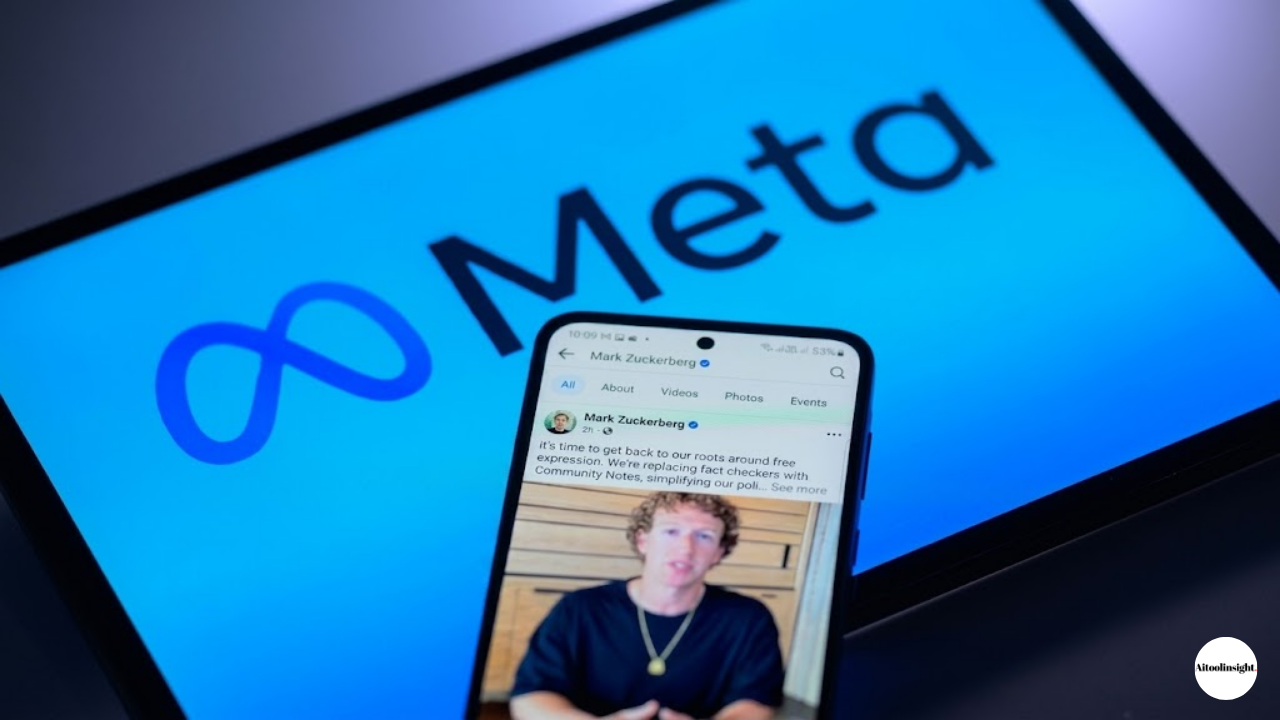
Mark Zuckerberg bet $14.3 billion and nine months of a complete organizational overhaul on this moment. On April 8, 2026, Meta launched Muse Spark the first AI model from its newly created Meta Superintelligence Labs, and the clearest signal yet that the company is done playing catch-up in the AI race.
When you think of Meta, Facebook and Instagram probably still come to mind first. That framing is rapidly becoming outdated. The company that built its empire on social graphs and advertising revenue is now betting its future on something far more ambitious: a natively multimodal reasoning model designed to act as a personal superintelligence for over three billion users worldwide.
Muse Spark is now live on meta.ai and the Meta AI app. It’s the first model in a new “Muse” family of systems, developed from scratch over the past nine months by a team that includes researchers poached from OpenAI, Anthropic, and Google. And unlike every major AI model Meta has released before it, this one is proprietary no open weights, no fine-tuning access for developers.
I spent time digging into what Muse Spark actually does, how it compares to the competition, and whether the “superintelligence” framing is real or marketing hype. Here’s the full picture.
What Muse Spark actually is and why it’s different from Llama
Muse Spark is not Llama 5. That distinction matters more than it might seem. For years, Meta’s AI strategy was anchored in open-source releases. Llama 1, Llama 2, Llama 3, and the Llama 4 series gave developers free access to model weights a move that built enormous goodwill in the developer community and positioned Meta as the “open alternative” to closed labs like OpenAI and Anthropic.
That era ended on April 8, 2026. According to Meta’s official announcement, Muse Spark is a closed, proprietary model. No weights are being released. Developers can apply for private API access through a limited preview program, but there’s no public model download. Meta has said it “hopes to open-source future versions,” but that’s a statement of intention, not a commitment and the AI community is already watching closely.
The technical distinction from Llama is just as significant. Muse Spark was built multimodal from the very first day of pretraining it wasn’t a language model with vision bolted on afterward. That means it natively integrates visual reasoning, tool use, and what Meta calls “visual chain-of-thought” into a single system. The company spent nine months rebuilding its entire AI infrastructure, including model architecture, optimization pipelines, and data curation, all under the direction of newly appointed Chief AI Officer Alexandr Wang.
What’s notable here is the efficiency claim. Meta says Muse Spark delivers the same capability as Llama 4 Maverick its previous midsize model using over an order of magnitude less compute. If that holds up under independent scrutiny, it’s a genuinely impressive engineering achievement. Smaller compute footprint means faster inference, lower costs, and easier deployment across billions of devices and platform integrations.
Who built it the Alexandr Wang story
The backstory behind Muse Spark is as interesting as the model itself. As CNBC reported, Zuckerberg was reportedly unhappy with the trajectory of Meta’s AI efforts and how far behind they’d fallen relative to ChatGPT and Claude. The response was decisive and expensive: in June 2025, Meta spent $14.3 billion to acquire a 49% nonvoting stake in Scale AI and brought in its co-founder and CEO, Alexandr Wang, as the company’s first-ever Chief AI Officer.
Wang wasn’t just hired for his resume. He came with a mandate to rebuild Meta’s AI division from the ground up and he did exactly that, creating Meta Superintelligence Labs as a dedicated unit separate from the existing research and engineering teams. He then went on an aggressive talent acquisition drive, recruiting researchers from across the industry with compensation packages that reportedly ran into the hundreds of millions of dollars when equity was included.
Muse Spark originally code-named “Avocado” during development is the first public output of that nine-month sprint. The stakes are high. Llama 4, Meta’s previous flagship, was widely panned by the developer community as underwhelming. Muse Spark needs to do more than show technical competence; it needs to restore Meta’s credibility as a serious AI player.
What Muse Spark can do the real capabilities breakdown
The feature list is genuinely broad. At its core, Muse Spark functions as a multimodal reasoning assistant you can feed it text, images, or voice, and it will handle everything from casual conversation to complex analysis. But several specific capabilities stand out from the general AI assistant template.
Contemplating Mode is the standout feature. When you invoke it either by explicitly saying “use Contemplating mode” or phrases like “think this through carefully” Muse Spark activates a multi-agent orchestration system that deploys several AI agents in parallel to tackle complex queries. This is especially useful for things like debugging code, working through multi-step research questions, analyzing legal documents, or planning detailed trips with multiple constraints. The approach mirrors what reasoning models like OpenAI’s o1 series and Google’s Gemini deep research mode do, but Meta’s implementation draws on its multi-agent architecture to maintain speed while increasing reliability.
The health features are a serious differentiator. Meta collaborated with more than 1,000 physicians to curate training data for health-related reasoning a level of domain-specific investment you don’t see often at this scale. The result is an AI that can answer medical questions with more factual precision than general-purpose models, generate interactive visual displays to explain nutritional information, and even annotate images to highlight which muscle groups are activated in a given exercise. That’s a long way from asking ChatGPT to summarize a WebMD article.
Multimodal perception opens up practical everyday use cases that feel genuinely useful rather than gimmicky. Snap a photo of your pantry and ask for a high-protein meal idea based on what’s visible. Upload a product image and ask how it compares to alternatives. Point your Meta glasses at a piece of equipment and get real-time troubleshooting guidance with dynamic visual annotations. These aren’t demos they’re the kinds of tasks that could actually change how people interact with AI on a daily basis.
If you’re already using the best AI chatbot tools available today, Muse Spark’s toolset will feel familiar in some ways but the social graph integration and health focus mark it as genuinely distinct.
Memory is another notable feature. Muse Spark can recall your past preferences, ongoing projects, and prior conversations to build continuity across sessions closer to how a real assistant works than the session-by-session amnesia that still plagues most AI tools. The AI can also tap into Meta’s vast pool of public content across Facebook, Instagram, and Threads to surface socially-validated recommendations. Ask what’s trending at coffee shops in your neighborhood and you get actual signal from the people who live there, not just generic search results.
How it compares to OpenAI, Google, and Anthropic
Meta’s benchmark results position Muse Spark as competitive with GPT-5.4, Claude Sonnet 4.6, and Gemini 3.1 Pro across reasoning, coding, and multimodal tasks. That’s a significant claim and a significant improvement over Llama 4, which failed to make a dent in the frontier model rankings. Independent verification of those benchmarks is still pending, and Meta has a complicated history here: the company was previously caught tuning a model specifically to perform better on published benchmarks than in real-world use. That context makes it reasonable to wait for third-party testing before taking Meta’s numbers at face value.
What the benchmark debate misses, though, is the more interesting strategic dimension. Meta doesn’t need to win on leaderboards. It needs to win on deployment. No other AI lab can distribute a new model to three billion monthly active users across Facebook, Instagram, WhatsApp, and Messenger in a matter of weeks. That’s an advantage OpenAI and Anthropic simply cannot replicate through API revenue and consumer app launches. We’ve seen a similar story with OpenAI consolidating all its products into one desktop superapp but even that doesn’t give OpenAI Meta’s distribution depth.
The comparison to Google’s Gemini ecosystem is also instructive. Google has been aggressively pushing Gemini into its own suite of three billion-user products (Search, Gmail, Android). The difference is that Meta’s social platforms generate a different kind of behavioral signal relational context, community trends, creator content that could make Muse Spark’s personalization layer uniquely powerful over time. Whether that plays out in practice depends heavily on how Meta handles privacy, which is far from settled.
The open-source departure is the real wildcard in any competitive analysis. Meta’s Llama models built a developer ecosystem that kept the company relevant in the AI conversation even when its proprietary efforts lagged. Closing off Muse Spark removes that safety net. The developer community on platforms like Reddit’s r/LocalLLaMA is already noting the shift and Wang’s vague promise to possibly open-source future versions is being watched carefully. If Meta can build a compelling API business and keep enterprises happy, the closed approach can work. If the model falls short in real-world benchmarks, the company has lost its goodwill buffer from the open-source days.
The privacy question nobody’s talking about enough
There’s a significant caveat buried in the Muse Spark launch that deserves more coverage than it’s getting. To use Muse Spark, you need to log in with an existing Meta account Facebook, Instagram, or a Meta AI account. Meta doesn’t explicitly state that your Facebook or Instagram data will be used to train or personalize the model. But given that Meta has historically trained its AI systems on public user data and is explicitly marketing Muse Spark as a “personal superintelligence” built on the relationships and context already in your life, the implication is fairly clear.
The health features add another layer of concern. Muse Spark can discuss health topics with elevated accuracy, thanks to physician-curated training data. But health queries are among the most sensitive data a person can share with a technology platform. Meta’s privacy commitments for health-related AI interactions will be scrutinized by regulators the company operates under significant EU Digital Markets Act pressure in Europe, and US legislators have been increasingly attentive to AI and health data. For now, this is a “watch this space” situation rather than a dealbreaker, but it’s a dimension users should understand before adopting the tool.
The broader Zuckerberg AI bet and what $115 billion means
Muse Spark isn’t just a product launch. It’s the first visible output of a bet that is staggering even by Silicon Valley standards. As Fortune reported, Meta has committed between $115 billion and $135 billion in AI-related capital expenditures for 2026 alone nearly double its capex from the prior year. The Hyperion data center project anchors much of this spending. That level of infrastructure investment signals that Zuckerberg views this as a decade-defining transition, not a product cycle.
The organizational structure tells a similar story. Wang’s Meta Superintelligence Labs sits alongside a newer applied AI engineering unit led by Maher Saba, who came from Reality Labs. Saba’s team focuses on building “the data engine that helps our models get better, faster” essentially the product-facing AI infrastructure. The parallel structure is Zuckerberg hedging: ensuring short-term product delivery continues even as Wang pursues longer-horizon superintelligence research. It’s a sensible two-track approach, but it also raises questions about internal alignment and whether both teams will move fast enough to stay competitive.
The open-source reversal is strategically significant in another way. For years, Meta subsidized the broader AI industry by providing free model weights that companies like Mistral, Perplexity, and hundreds of startups built on. That generosity is over, at least for the Muse family. Meta is now directly competing for the enterprise AI contract market that OpenAI, Anthropic, and Google have been building for two years. Muse Spark’s API preview program is the opening move in that effort. Meta’s advantage is cost efficiency if Muse Spark can deliver competitive quality at lower inference cost, enterprises have a strong financial reason to consider it. The next few quarters will show whether the model can back that up in production environments.
This pattern of major tech companies consolidating AI capabilities echoes what we’ve seen elsewhere including companies that moved too fast on AI integration and are now recalibrating. Meta’s methodical nine-month rebuild suggests Zuckerberg learned from those cautionary tales.
How to try Muse Spark right now
Getting started is straightforward. Muse Spark is currently live and free to use at meta.ai on desktop and through the Meta AI mobile app on both iOS and Android. You’ll need a Meta account Facebook or Instagram credentials work. Once you’re in, the experience looks like a standard AI chat interface, but the depth of what you can do goes further than most people expect on first use.
For standard queries, just type naturally. For anything requiring deeper reasoning analysis, planning, coding, research either tap the “Contemplating” toggle or start your prompt with a phrase like “think this through carefully” or “use Contemplating mode.” The model will spin up its multi-agent reasoning process, which takes slightly longer but produces noticeably more structured, well-reasoned responses on complex topics.
If you want to test the multimodal features, upload an image and ask a specific question about it. The health features are worth trying ask about nutrition for a food item, or describe a health situation and ask for a general overview of relevant factors. The responses go deeper than what general-purpose models typically provide.
Shopping Mode can be activated with a phrase like “help me find something to buy for…” it surfaces creator-driven recommendations from Meta’s platforms rather than generic web results. Availability varies by region in early rollout. And if you have Meta Ray-Ban smart glasses, you should see Muse Spark integration arrive within the next few weeks, which will be the most interesting real-world test of its multimodal vision capabilities. This also feeds into a broader trend we’ve been tracking the integration of AI into wearables and AI in everyday business and productivity contexts is accelerating across the board.
What comes next and whether Meta can actually deliver
Muse Spark is explicitly designed as the first step on a “scaling ladder.” Meta’s technical blog post makes clear that larger, more capable Muse models are already in development this is the foundation, not the ceiling. The company’s approach mirrors what OpenAI did with GPT-3: launch something competitive enough to establish market presence, get it in front of users at scale, then iterate rapidly based on real-world usage data. With three billion potential users as a feedback loop, the iteration advantage could be enormous.
The real test over the next six months isn’t whether Muse Spark can win an academic benchmark. It’s whether it can make a WhatsApp conversation noticeably more useful, or whether it can help Instagram’s billion-plus users discover products and places in ways they couldn’t before. Meta’s AI play has always been downstream of its distribution and that’s still true here. The model doesn’t need to be the best in the world. It needs to be good enough, deployed at a scale nobody else can match.
The open-source community will keep pressure on Meta throughout this process. Every quarter that passes without Muse weights being released adds friction to developer relationships that Llama had built over years. Meta’s ability to maintain its standing in the developer ecosystem while transitioning to a proprietary model strategy is one of the most interesting tensions in AI right now. You can follow developments on AI developer tools and the shifting landscape for builders as this story continues to evolve.
One thing is certain: the version of Meta that was a passive bystander in the AI race is gone. Muse Spark isn’t just a product it’s a statement of intent from a company that has spent a year and a half reorganizing, spending, and recruiting specifically to win this competition. Whether it succeeds depends on execution from here. But after Llama 4’s stumble, the launch of Muse Spark at least establishes that Meta has something worth taking seriously.

An AI researcher who spends time testing new tools, models, and emerging trends to see what actually works.

