

Best AI Tools for E-commerce Returns & Refund Management

Introduction
Returns and refunds management covers the workflows and systems that handle product returns, exchanges, refunds, and the logistics and financial reconciliation that follow. In e-commerce, returns are an inevitable cost of doing business — particularly in categories like apparel, footwear, electronics, and consumables. Poorly managed returns cause churn, inflate operating costs, create inventory inaccuracies, complicate accounting, and damage brand reputation.
Why returns & refunds management matters for e-commerce:
- Returns reduce net revenue and increase reverse-logistics costs.
- A painless returns experience improves customer trust and repeat purchases.
- Accurate returns data improves product quality, sizing guidance, and inventory forecasting.
- Efficient refund reconciliation reduces disputes with marketplaces, payment processors, and affiliates.
Key challenges:
- High reverse logistics costs and inefficient routing of returned inventory.
- Inconsistent return policies across channels and marketplaces.
- Fraudulent returns and friendly fraud (chargeback abuse).
- Manual refund reconciliation and delayed customer refunds.
- Lack of visibility into return reasons and product quality issues.
How AI tools solve them:
- Predict return likelihood and flag high-risk orders for preventive actions.
- Automate returns portals and self-service flows that reduce support load.
- Route returns intelligently (resell, refurbish, recycle) to maximize recovery.
- Detect fraud patterns and automated anomalous-return blocking.
- Provide analytics that feed product, sizing, and fulfillment improvements.
Short transition: below are 25 AI tools specialized for returns and refunds management for e-commerce — each described with practical features, use cases, pros, cons, and alternatives to help you build a low-cost, customer-friendly reverse-logistics operation.
TOOL 1 — Returnly AI
Overview
Returnly AI automates returns portals, issues instant store credit or refunds, and intelligently routes returned inventory to optimal disposition channels.
Best For
D2C and marketplace sellers who want a self-service returns experience with fast customer refunds.
Key Features
- Branded, self-service returns portal
- Instant store credit issuance for faster exchanges
- Automated disposition routing (resell, refurbish, recycle)
- Return reason classification and analytics
Use Cases
- Offering instant store credit to speed up reorders
- Reducing support tickets by enabling self-service returns
- Tracking return reasons to reduce product issues
Pricing
Tiered by order volume and enabled features.
Pros
- Great customer experience (fast resolutions)
- Improves recovery rate by routing returned goods appropriately
Cons
- Advanced disposition automation may need data tuning
Alternatives
- Loop Returns
- Happy Returns
TOOL 2 — Loop Returns AI
Overview
Loop Returns AI focuses on exchanges and store-credit flows, optimizing for retention and re-purchase while simplifying refund reconciliation.
Best For
Subscription and apparel brands that want to minimize revenue leakage when returns occur.
Key Features
- Exchange-first returns logic to retain revenue
- Rule-based and AI-recommended refund vs exchange decisions
- Merchant dashboard with ROI on credit issuance
- Integrations with order management and ecommerce platforms
Use Cases
- Converting refunds to exchanges to increase LTV
- Automating refund approval based on item condition and SKU rules
- Tracking exchange success and incremental revenue
Pricing
Usage or order-volume based.
Pros
- Exchange-first approach increases repurchase rates
- Clear analytics on cost of refunds vs retained revenue
Cons
- Requires careful coupon/store-credit governance
Alternatives
- Returnly AI
- ReturnMagic
TOOL 3 — Happy Returns AI
Overview
Happy Returns AI offers merchant-return hubs and carrierless returns with AI-enabled routing and reconciliation to reduce shipping friction for customers.
Best For
Brands that want a network-based return option and minimal packaging burden for customers.
Key Features
- Local return drop-off network integration
- Automated refund reconciliation once an item is received and inspected
- Return reason analytics and exception workflows
- Carrierless label generation and notifications
Use Cases
- Enabling convenient in-person return drop-offs
- Lowering return shipping costs for customers and merchants
- Speeding up physical receipt to refund cycle
Pricing
Per-return or subscription packages.
Pros
- Excellent customer convenience options
- Faster physical processing and reconciliation
Cons
- Dependent on network coverage for drop-offs
Alternatives
- Returnly AI
- Narvar Returns
TOOL 4 — Narvar Returns AI
Overview
Narvar Returns AI provides branded portals, predictive return logistics, and post-return analytics focused on CX and operational recovery.
Best For
Large retailers and enterprise sellers requiring robust omnichannel returns orchestration.
Key Features
- Unified returns portal across channels
- Predictive routing and restocking recommendations
- Automated carrier and refund orchestration
- Returns trend dashboards and root-cause analysis
Use Cases
- Centralizing marketplace and direct-return processes
- Using return data to fix product quality and sizing issues
- Integrating refund workflows across platforms
Pricing
Enterprise-tier pricing.
Pros
- Strong omnichannel orchestration and analytics
- Scales well for enterprise needs
Cons
- Higher cost and longer onboarding
Alternatives
- Happy Returns
- Returnly AI
TOOL 5 — ReturnMagic AI
Overview
ReturnMagic AI automates Shopify return flows, generates prepaid labels, and supports auto-refunds when return items pass verification checks.
Best For
Small-to-mid Shopify merchants looking for simple automation.
Key Features
- Quick install returns portal for Shopify
- Prepaid label creation and shipment tracking
- Auto-refund after customs verification rules
- Return reason tagging and simple analytics
Use Cases
- Reducing manual refund tasks for small teams
- Speeding up processing with auto-refund rules
- Collecting return reason data for product insights
Pricing
App subscription with tiered order limits.
Pros
- Easy setup for Shopify stores
- Low entry cost and clear ROI
Cons
- Less feature-rich for complex workflows
Alternatives
- Returnly AI
- Loop Returns AI
TOOL 6 — Optoro Intelligent Returns
Overview
Optoro uses AI to route returned inventory to the highest-value channel (resell, refurbish, donation) and optimizes reverse-logistics for retailers and brands.
Best For
Retailers with high return volumes and significant opportunity for recovery via resale/refurbish channels.
Key Features
- Disposition optimization for maximum recovery value
- Intelligent routing to channels (secondary markets, outlets, refurb)
- Reverse logistics optimization and carrier matching
- Recovery metrics and margin impact analytics
Use Cases
- Maximizing resale value of returns and reducing waste
- Automating return sorting and routing decisions
- Tracking profitability of reverse-logistics flows
Pricing
Enterprise, typically custom pricing.
Pros
- Strong focus on maximizing return recovery value
- Reduces total cost of returns through routing optimization
Cons
- Best suited for high-volume operations; costly for small merchants
Alternatives
- B-Stock (secondary marketplaces)
- Inmar Intelligence
TOOL 7 — ReturnGO AI
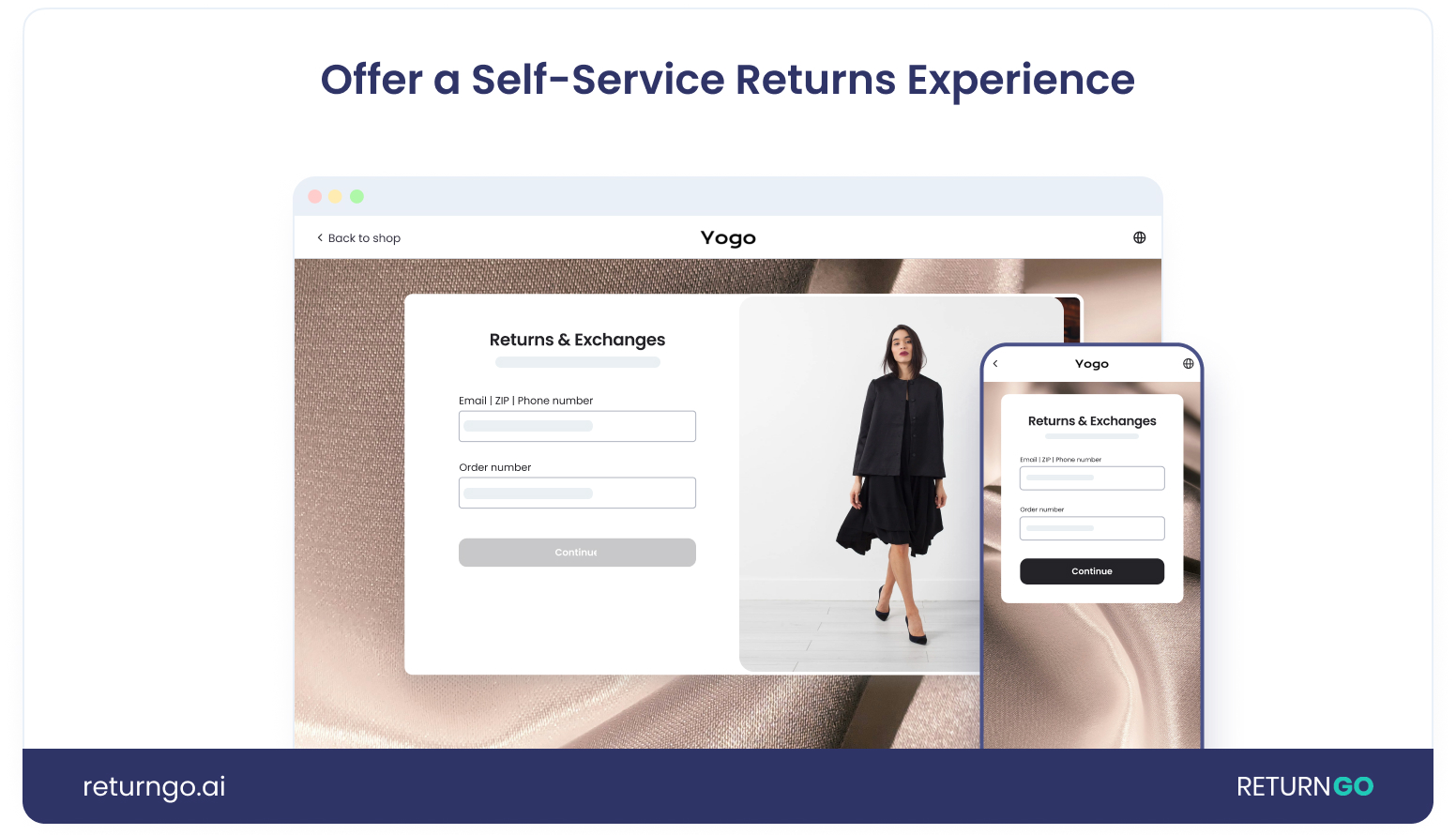
Overview
ReturnGO AI automates return pickups, instant exchange options, and dynamically suggests exchanges based on predicted customer preferences.
Best For
D2C brands offering at-home pickups and pickup-based returns in urban markets.
Key Features
- Pickup scheduling automation
- AI-driven exchange suggestions during pickup scheduling
- Instant refund or exchange triggers after pickup confirmation
- Pickup routing and carrier orchestration
Use Cases
- Improving CX with at-home pickup options
- Offering instant exchanges to increase retention
- Lowering return friction for high-touch customers
Pricing
Per-pickup or per-return pricing.
Pros
- Highly convenient experience drives repeat purchases
- Pickup routing reduces friction for large-item returns
Cons
- Pickup cost can be high in low-density areas
Alternatives
- Happy Returns (drop-off network)
- ReverseLogix pickup options
TOOL 8 — ReverseLogix AI
Overview
ReverseLogix AI handles returns processing, RMA automation, and warehouse disposition workflows for mid-to-large sellers and 3PLs.
Best For
Merchants and 3PLs that need enterprise RMA workflows and warehouse reverse logistics.
Key Features
- RMA automation and inbound scheduling
- Warehouse disposition workflows (quarantine, inspect, refurb)
- Carrier and shipping reconciliation for returns
- Integration with WMS and OMS systems
Use Cases
- Automating RMAs across multiple channels
- Streamlining warehouse intake and inspection of returns
- Reconciling carrier charges and refund timing
Pricing
Module-based enterprise pricing.
Pros
- Deep warehouse and 3PL workflow support
- Integrates with core fulfillment systems
Cons
- Implementation can require substantial operations effort
Alternatives
- Optoro
- Loop Returns (for frontend flows)
TOOL 9 — Inmar Intelligence Returns
Overview
Inmar Intelligence combines returns processing, reverse-logistics, and analytics to convert returns into recaptured value and insights.
Best For
Retailers and CPG brands with high return complexity and omnichannel footprints.
Key Features
- Returns processing and inspection services
- Analytics linking returns to product defects and supply issues
- Routing recommendations (secondary markets, recycling)
- Financial reconciliation and marketplace returns handling
Use Cases
- Identifying systemic product defects from return patterns
- Centralizing returns processing across retail and online channels
- Monetizing returns via secondary channels
Pricing
Custom, enterprise-grade.
Pros
- Combines physical processing with deep analytics
- Strong for brands with sustainability goals
Cons
- Enterprise focus; small merchants may find it costly
Alternatives
- Optoro
- B-Stock
TOOL 10 — Returnly FraudGuard
Overview
FraudGuard (module) leverages behavioral patterns and shipment history to detect suspicious returns and flag potential abuse for manual review or auto-deny.
Best For
Merchants experiencing high rates of friendly fraud or organized return abuse.
Key Features
- Anomaly detection for refund/return patterns
- Velocity checks, device and geo signals, historic return flags
- Auto-quarantine and manual review workflows
- Integration with chargeback and payment providers
Use Cases
- Preventing serial returners from gaming refunds
- Reducing chargebacks and fraudulent refund payouts
- Prioritizing manual reviews for highest-risk returns
Pricing
Per-scan or subscription rules.
Pros
- Reduces fraud-related losses
- Automates risk triage to reduce manual workload
Cons
- Risk of false positives that need human review
Alternatives
- Signifyd (fraud protection)
- Forter
TOOL 11 — RefundFlow AI
Overview
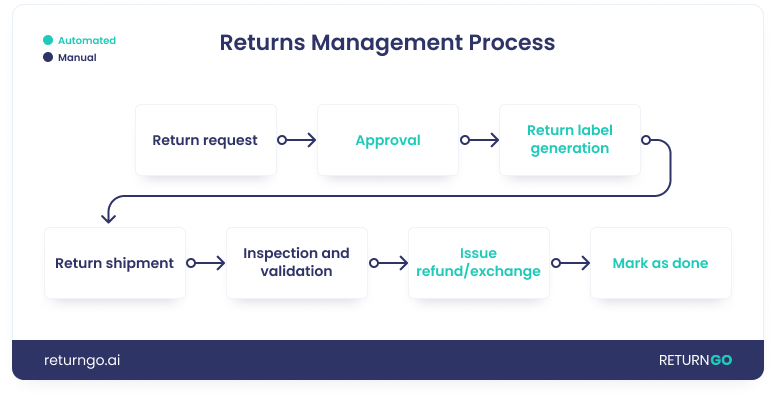
RefundFlow AI automates refund approvals, accounting reconciliation, and merchant payouts while keeping customers updated with transparent timelines.
Best For
Merchants wanting to shorten refund cycles and automate finance reconciliation.
Key Features
- Auto-approve/refund rules based on policy and inspection results
- Refund liability and accounting reconciliation reports
- Customer-facing tracking and status updates for refunds
- Integration with payment gateways and accounting systems
Use Cases
- Accelerating refunds to boost CX and repeat purchase propensity
- Reducing finance team reconciliation workload
- Tracking refund liabilities for accurate financial forecasting
Pricing
Transaction- or volume-based.
Pros
- Reduces refund processing time
- Keeps finance teams aligned with operations
Cons
- Needs clear refund policy configuration to avoid errors
Alternatives
- PayoutFlow AI (payout automations)
- Custom ERP integrations
TOOL 12 — ReturnPredict AI
Overview
ReturnPredict AI calculates the probability that an order will be returned, enabling preemptive interventions like size guidance, alternate offers, or enhanced packaging.
Best For
Brands that want to reduce returns through preventive measures and targeted interventions.
Key Features
- Order-level return probability scoring
- Feature importance explanations (why an order is likely to return)
- Action recommendations (suggest different size, include fit guide)
- Batch scoring for prevention campaigns pre-shipment
Use Cases
- Pre-shipment messaging to at-risk customers with size guidance
- Prioritizing inspection for predicted-return shipments
- Offering incentives to keep product (discounts, warranty)
Pricing
Model-run or API-call pricing.
Pros
- Prevents returns by acting before shipment
- Explainability helps operations and CX teams
Cons
- Requires historical return data for best accuracy
Alternatives
- Predictive Lifetime Scorer (for CLV-weighted actions)
- AlphaPredict-style demand models
TOOL 13 — InspectAI
Overview
InspectAI automates condition assessment of returned items using customer-uploaded images, speeding disposition and refund decisions.
Best For
Merchants that need rapid condition assessment for high-return-volume SKU groups.
Key Features
- Image-based condition classification (new, used, damaged)
- Auto-decision rules for refunds or partial refunds
- Integration with return portals to collect images on initiation
- Audit trail for dispute resolution
Use Cases
- Reducing manual inspection workload at warehouses
- Speeding partial refunds for damaged-but-repairable items
- Providing evidence for chargeback disputes
Pricing
Per-image or subscription.
Pros
- Greatly speeds disposition decisions
- Reduces manual inspection costs
Cons
- Image quality from customers can be inconsistent
Alternatives
- ReverseLogix inspection workflows
- Custom computer-vision solutions
TOOL 14 — RestockAI
Overview
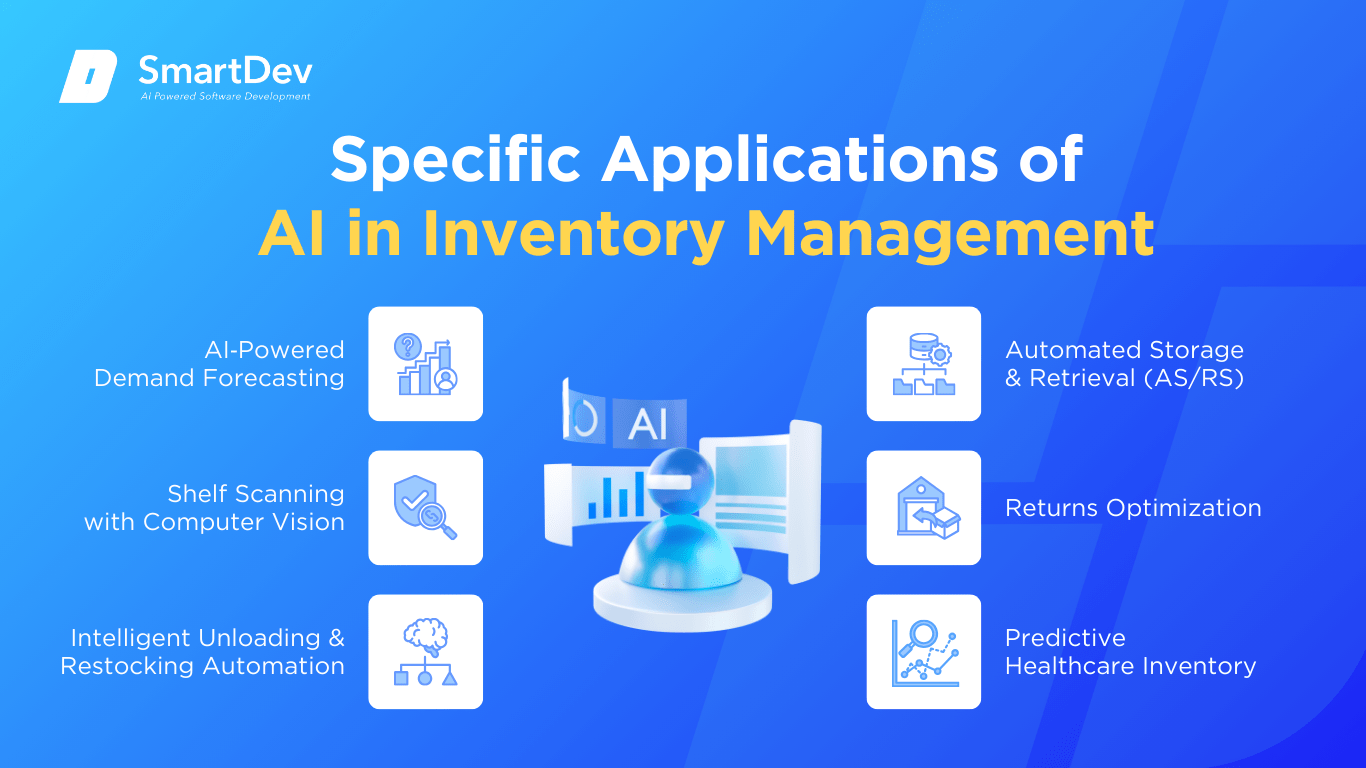
RestockAI determines whether returned inventory should be restocked, refurbished, or liquidated based on condition, demand, and margin recovery potential.
Best For
Retailers optimizing return-to-shelf decisions to maximize recovered margin.
Key Features
- Margin-recovery scoring per returned SKU
- Integration with WMS for automated restock flags
- Forecasting of secondary-market demand for returned items
- Rules for quarantining vs immediate restock
Use Cases
- Maximizing recovered margin by routing restockable items back to inventory
- Reducing waste by routing non-resellable items to refurbish or recycle paths
- Planning promotions for returned inventory where appropriate
Pricing
Feature/module pricing.
Pros
- Improves inventory recovery economics
- Reduces unnecessary liquidation
Cons
- Requires integration with inventory systems to be effective
Alternatives
- Optoro
- Inmar Intelligence
TOOL 15 — ChargebackShield AI
Overview
ChargebackShield AI links chargeback signals to return workflows to speed dispute resolution and reduce fraud-related costs.
Best For
Merchants dealing with high chargeback volumes tied to returns and disputed refunds.
Key Features
- Correlates returns data with chargeback trends
- Automated evidence collection (tracking, inspection photos) for disputes
- Risk scoring for chargeback likelihood and recommended mitigation
- Integration with payment processors for automated dispute filing
Use Cases
- Winning chargeback disputes faster by supplying structured evidence
- Identifying patterns that cause chargebacks related to returns
- Reducing chargeback rates with preventive measures
Pricing
Per-dispute or subscription.
Pros
- Lowers financial impact of chargebacks
- Speeds dispute resolution
Cons
- Success depends on quality of integrated evidence
Alternatives
- Signifyd
- Chargebacks911
TOOL 16 — ReturnsAnalytics AI
Overview
ReturnsAnalytics AI centralizes return metrics, correlates returns with SKUs, vendors, and channels, and surfaces root causes for operational and product decisions.
Best For
Brands that want to reduce return rates by acting on data-driven root causes.
Key Features
- SKU- and vendor-level return rate dashboards
- Root-cause clustering for return reasons (fit, quality, damage)
- Correlation with ad campaigns and promotions that drive returns
- Executive summary reports and alerting for spikes
Use Cases
- Prioritizing product improvements based on return drivers
- Adjusting marketing and targeting to reduce return-prone orders
- Vendor performance tracking for supplier accountability
Pricing
Seat- or data-volume based.
Pros
- Actionable insights that reduce return rates over time
- Aligns product, ops, and marketing teams
Cons
- Requires consolidated data from multiple systems
Alternatives
- InsightsRadar AI
- LTV Lens Analytics (for financial linkage)
TOOL 17 — LabelGen AI
Overview
LabelGen AI automates generation of prepaid return labels, optimizes carrier selection by cost and SLA, and includes tracking reconciliation.
Best For
Merchants seeking to reduce carrier cost and complexity for returns, especially with prepaid labels.
Key Features
- Carrier selection optimization by cost/time
- Auto-generation of prepaid labels and email/SMS delivery
- Tracking and reconciliation dashboards for carrier disputes
- Regional carrier-fallback routing to avoid delays
Use Cases
- Lowering average return shipping cost through smart routing
- Reducing lost returns with better tracking and reconciliation
- Automating label issuance for high-volume return flows
Pricing
Per-label or subscription.
Pros
- Reduces return shipping cost and errors
- Speeds return tracking visibility
Cons
- Regional carriers may have variable service levels
Alternatives
- Returnly label features
- ShipEngine integrations
TOOL 18 — CustomerCare ReturnBot
Overview
ReturnBot manages customer-facing returns interactions via chat, automates RMA creation, offers instant policy answers, and collects inspection images to speed processing.
Best For
Merchants aiming to reduce support ticket load while improving returns communication.
Key Features
- Chatbot-guided RMA creation and label issuance
- Automatic escalation when complex cases or disputes arise
- Image collection and guided condition reporting for faster inspections
- Multilingual support for international returns
Use Cases
- Reducing support agent workload on returns inquiries
- Enabling 24/7 returns initiation for global customers
- Pre-collecting condition evidence to speed refunds
Pricing
Conversational or session-based pricing.
Pros
- Improves CX and reduces agent workload
- Collects higher-quality evidence at intake
Cons
- Complex exceptions still require human intervention
Alternatives
- Gorgias returns flows
- Zendesk automation with bot integrations
TOOL 19 — Sustainability Returns AI
Overview
Sustainability Returns AI optimizes disposition to minimize waste and carbon impact — recommending refurbishment, donation, recycling, or carbon-offset options.
Best For
Brands with sustainability commitments and regulatory reporting needs.
Key Features
- Environmental impact scoring per disposition path
- Recommendations for resell vs refurbish vs recycle to minimize waste
- Sustainability reporting for ESG disclosure
- Partner routing to certified refurbishers and recyclers
Use Cases
- Reducing landfill impact from returned goods
- Reporting on returns-related sustainability KPIs
- Leveraging refurbished inventory as a revenue stream
Pricing
Feature-tiered with reporting modules.
Pros
- Aligns returns flows with sustainability goals
- Opens secondary revenue from refurbished items
Cons
- Additional operational complexity to manage refurbish partners
Alternatives
- Inmar Intelligence sustainability modules
- Optoro sustainability features
TOOL 20 — MarketplaceReturns AI
Overview
MarketplaceReturns AI centralizes returns across marketplaces (Amazon, eBay, Walmart), addressing different marketplace rules, auto-generating appeals, and reconciling refund liabilities.
Best For
Sellers heavily dependent on marketplaces with varying returns rules.
Key Features
- Marketplace-specific return flows and policy mappings
- Auto-appeal generation for marketplace disputes
- Refund liability reconciliation by channel
- Unified reporting of marketplace return metrics
Use Cases
- Centralizing return handling across multiple marketplaces
- Reducing financial leakage from marketplace-specific refund rules
- Automating appeal workflows and evidence submission
Pricing
Connector and volume-based.
Pros
- Saves time by harmonizing varied marketplace processes
- Reduces refund leakage through automated evidence and appeals
Cons
- Marketplace APIs and policies change frequently and require maintenance
Alternatives
- TrackSure AI (attribution & reconciliations)
- Narvar Returns
TOOL 21 — WarrantyReturn AI
Overview
WarrantyReturn AI handles warranty claims, automates RMA issuance, and maps warranty policies to refund/refurb decisions with vendor warranty coordination.
Best For
Electronics and durable-goods sellers with warranty-based returns.
Key Features
- Warranty policy mapping and eligibility checks
- Automated RMA creation and vendor routing
- Coverage verification and replacement or repair routing
- Fraud detection on warranty claims
Use Cases
- Speeding warranty claims processing and vendor coordination
- Reducing warranty fraud with eligibility checks
- Tracking warranty cost and vendor performance
Pricing
Per-claim or subscription.
Pros
- Reduces warranty processing time and vendor confusion
- Improves customer trust with faster replacements
Cons
- Requires tight integration with vendor systems
Alternatives
- Returnly Warranty modules
- ERP warranty modules
TOOL 22 — ReverseLogistics Marketplace Hub (RL Hub)
Overview
RL Hub is a network orchestration platform that consolidates returns processing across 3PLs, refurbishers, and liquidation partners using AI to select the best downstream partner.
Best For
Brands and retailers needing an end-to-end network for returns processing and disposition.
Key Features
- Network partner selection and optimization
- SLA and cost-aware routing to refurbishers or liquidators
- Automated partner onboarding and SLA monitoring
- Settlement and payment automation for disposition partners
Use Cases
- Outsourcing returns processing at scale while optimizing recovery
- Managing multiple refurbishers and liquidation partners centrally
- Ensuring SLA compliance and settlement accuracy
Pricing
Network/transaction-based.
Pros
- Reduces vendor management overhead
- Optimizes recovery across a broad partner network
Cons
- Onboarding new partners and data sharing agreements can be complex
Alternatives
- Optoro partner network
- Inmar returns partner services
TOOL 23 — PolicyManager AI
Overview
PolicyManager AI helps merchants design dynamic return policies that vary by SKU, channel, lifecycle stage, or geography, and forecasts policy impact on returns and sales.
Best For
Brands wanting to create rules-based or regional return policies that balance conversion and return risk.
Key Features
- Rule engine to vary policy by SKU/channel/region
- Forecasted impact modeling for policy changes
- Customer-facing policy generator with localized language
- A/B testing support for policy variants
Use Cases
- Testing shorter return windows for low-margin items
- Localizing return policy text to comply with regional regulations
- Modeling how policy changes will affect returns and conversion
Pricing
Per policy-change or subscription.
Pros
- Enables more nuanced policy management for margin protection
- Reduces risk from one-size-fits-all return policies
Cons
- Policy complexity can confuse customers if not communicated well
Alternatives
- Narvar policy modules
- Custom legal + UX copy workflows
TOOL 24 — ReturnsQA AI
Overview
ReturnsQA AI provides automated quality-assurance checks for returned goods, scoring refurbishment effort, and suggesting repair actions or parts required.
Best For
Merchants that refurbish returns or operate their own repair centers.
Key Features
- QA scoring for returned items with suggested refurb steps
- Parts list and labor estimate generation for repairs
- Integration with refurb workflows and cost accounting
- Historical QA trends for supplier feedback
Use Cases
- Speeding refurbishment by pre-populating repair instructions
- Reducing time-to-resell for refurbished items
- Feeding supplier improvement programs with QA data
Pricing
Per-inspection or subscription.
Pros
- Lowers refurbishment cycle time and costs
- Improves accuracy of repair estimates
Cons
- Requires reliable inbound condition data to be accurate
Alternatives
- Optoro refurbishment workflows
- Inmar inspection services
TOOL 25 — Returns Central Suite (All-in-One)
Overview
Returns Central Suite bundles returns portal, fraud detection, disposition optimization, carrier routing, analytics, and sustainability modules into a single integrated platform for merchants.
Best For
Retailers that prefer a single-vendor solution covering all reverse-logistics needs with modular scaling.
Key Features
- Branded returns portal and RMA automation
- Fraud detection and inspection automation
- Disposition routing and partner network integration
- Returns analytics, sustainability reporting, and accounting reconciliation
Use Cases
- Deploying a single, coherent returns stack across channels
- Reducing integration complexity and vendor management overhead
- Scaling returns operations quickly with cohesive workflows
Pricing
Modular subscription with enterprise tiers.
Pros
- Reduces vendor sprawl and simplifies ops
- Cohesive data model for better analytics
Cons
- May not be as best-in-class for every specialized function
Alternatives
- Combine best-of-breed stack (Returnly + Optoro + RefundFlow AI)
- Large enterprise providers with modular add-ons
FINAL VERDICT
Returns and refund management is now a strategic lever, not just a cost center. AI provides the levers to:
- Prevent returns by predicting risk and prompting preventive actions before shipment.
- Improve customer experience with fast, branded self-service returns and instant credits.
- Recover value through intelligent disposition and secondary-market routing.
- Reduce fraud and chargebacks via signal-driven detection and integrated evidence collection.
- Turn returns data into product, sizing, and supplier improvements that lower future returns.
Best picks by business size
- Small stores / startups: ReturnMagic, LabelGen AI, ReturnBot (lightweight cost and fast setup).
- Mid-size brands: Returnly AI, Loop Returns AI, RefundFlow AI, ReturnsAnalytics AI (balanced automation + insights).
- Large / enterprise: Optoro, Narvar, ReverseLogistics Marketplace Hub, Inmar Intelligence (deep reverse-logistics, partner networks, and analytics).
Most powerful tools overall: Optoro (recovery optimization), Narvar (omnichannel orchestration), Returnly (CX + instant credit), ReverseLogistics Marketplace Hub (network orchestration).
Best-value combinations: ReturnMagic (frontend/portal) + LabelGen AI (carrier optimization) + ReturnsAnalytics AI (insights) — fast ROI without large up-front costs.
Implementation priorities:
- Start with a branded self-service returns portal to reduce support volume and improve speed.
- Add a predictive returns layer to prevent obvious returns pre-shipment.
- Implement intelligent label and carrier routing to control costs.
- Apply disposition optimization to maximize recovery value.
- Integrate fraud detection and chargeback evidence automation to protect margins.
- Use returns analytics to close the loop on products, suppliers, and marketing that drive returns.
FAQs
1. How quickly can a returns AI tool reduce cost?
Initial reductions in manual workload and faster refunds can be realized in weeks after deployment; improvements in recovery value and return rate reduction usually appear over months as data and dispositions optimize.
2. Will instant credit or exchanges increase fraud?
Instant credit and exchange workflows can raise fraud risk if not paired with risk signals; combine instant offers with fraud-scoring and condition verification to minimize abuse.
3. Should I offer free returns for all products?
Free returns improves conversion but increases cost; consider differentiated policies by SKU, margin, or geography and use predictive models to provide targeted offers that balance conversion and return risk.
4. How do I measure returns program ROI?
Measure net recovered margin (resell + refurbished value) minus reverse-logistics and processing costs, combined with retention uplift from fast refunds and exchanges. Track chargeback reduction and customer lifetime impact.
5. Can returns data reduce future returns?
Yes. Aggregated returns reasons drive product, sizing, and content changes (size guides, images, descriptions) which systematically reduce return rates when acted upon.

An AI researcher who spends time testing new tools, models, and emerging trends to see what actually works.

